If you're running large-scale web scraping operations, collecting market intelligence, or automating data pipelines across global markets, you've probably asked yourself: what are datacenter proxies for scraping, and how do I choose a provider that actually delivers?
I've been there. A few months ago, I was helping a data analytics firm scrape public data from 50+ websites across 20 countries. We needed speed, scale, and cost efficiency — and we needed it fast. We started with a premium residential proxy setup, but the costs were spiraling. Then we discovered the power of datacenter proxies scraping for the right use cases.
That experience taught me a crucial lesson: datacenter proxies aren't inferior to residential proxies — they're simply optimized for different workloads. Here's what I learned about datacenter proxies scraping, when to use them, and what you need to know before you buy.
📑 What You'll Learn
What Are Datacenter Proxies for Scraping?
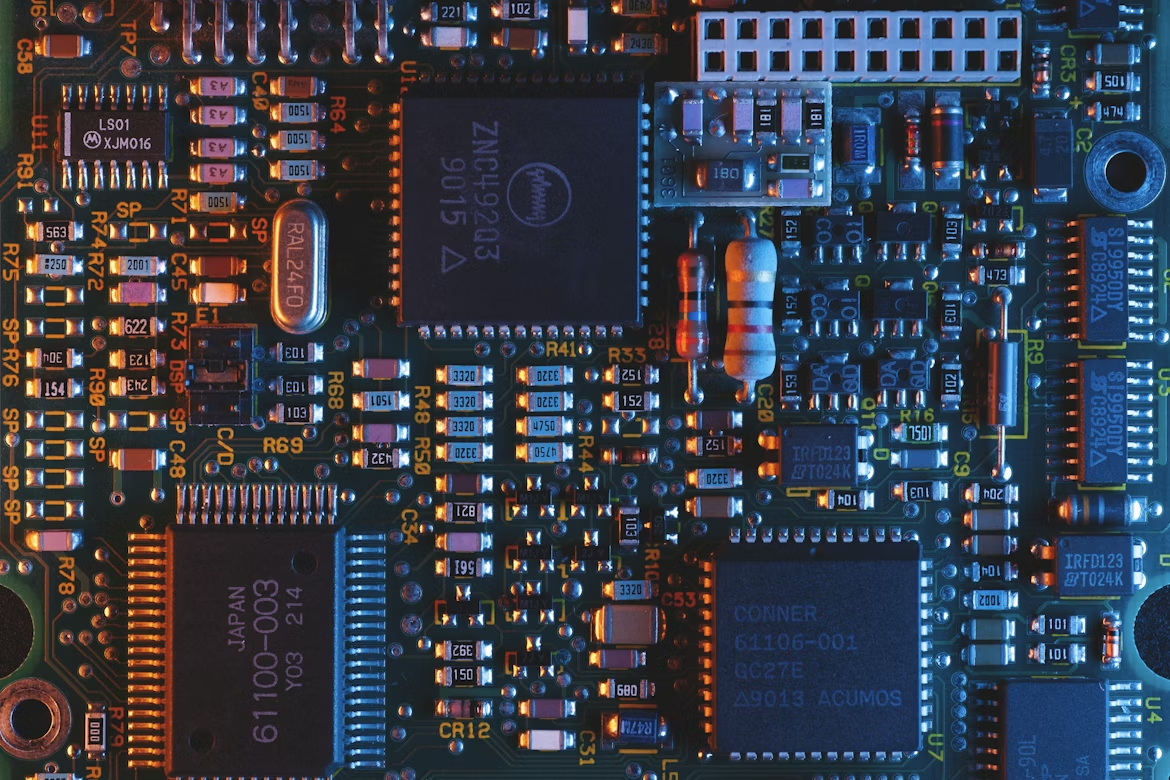
Datacenter proxies are IP addresses hosted on servers in data centers — not assigned to real residential devices[reference:0]. They come from cloud infrastructure and are owned and managed by proxy providers, not by Internet Service Providers[reference:1]. This makes them fast, affordable, and easy to scale — ideal for high-volume scraping tasks that don't require the trust signals of residential traffic[reference:2].
For datacenter proxies scraping, the key advantage is speed. Datacenter proxies typically operate 3x to 4x faster than residential proxy connections because they're built on enterprise-grade bandwidth infrastructure[reference:3]. They're also significantly cheaper — often a fraction of the cost of residential proxies[reference:4].
However, datacenter IPs are easier to detect and block than residential IPs. Since they originate from known server infrastructures, modern anti-bot systems can flag them as non-human traffic[reference:5]. On heavily protected websites, datacenter proxies can see success rates drop to 40-60%, compared to 95-99% for residential proxies[reference:6].
💡 Key Insight: Datacenter proxies scraping is the most cost-effective and fastest approach for high-volume data collection on lightly protected sites. For heavily guarded platforms, residential or mobile proxies are the safer choice[reference:7].
When to Use Datacenter Proxies for Scraping
Datacenter proxies scraping is the right choice for specific use cases. Here's when they shine:
- High-volume, predictable scraping jobs — where speed and cost efficiency matter more than trust signals[reference:8].
- Low-security targets — public directories, lightly protected sites, and targets that mainly care about request volume[reference:9].
- Bulk research and rank tracking — SEO tools and large-scale data collection where occasional blocks are acceptable[reference:10].
- Budget-conscious operations — when residential proxy costs are prohibitive for the scale you need.
- Hybrid workflows — using datacenter proxies for volume-sensitive workloads and residential proxies for trust-sensitive targets[reference:11].
5 Key Factors When Choosing Datacenter Proxies for Scraping
Here are the five essential factors I use to evaluate datacenter proxy providers for datacenter proxies scraping — and what to look for when choosing a service.
1. Speed & Latency — Performance Matters
The whole point of datacenter proxies is speed. Look for providers with millisecond response times and enterprise-grade bandwidth[reference:12]. Datacenter proxies typically operate 3-4x faster than residential proxies[reference:13], making them ideal for high-volume scraping.
PXYEDGE offers 99.9% uptime with 0.05s latency and unlimited sessions, ensuring your scraping pipelines run fast and reliably[reference:14].
2. IP Pool Quality — Clean IPs Matter
A massive pool of flagged or blacklisted IPs is worse than a smaller pool of clean ones[reference:15]. Look for providers that actively verify and clean their IP pools regularly.
While PXYEDGE is primarily known for its 80M+ residential IP pool, their infrastructure is built to support both residential and datacenter-grade workloads[reference:16][reference:17].
3. Geographic Coverage — Country and City Targeting
If you need localized data from specific markets — New York, São Paulo, Mumbai, London — you need a provider that offers country and city-level targeting. PXYEDGE supports city-level precision across 195+ countries[reference:18][reference:19].
Their country-specific IP counts include US 8.6M+ IPs, UK 5.9M+ IPs, India 5.2M+ IPs, Canada 2.1M+ IPs, and more[reference:20].
4. Rotation Flexibility — Match Your Workflow
Everyone claims "automatic rotation," but what that actually means varies wildly. For most scraping workflows, you want per-request rotation — a fresh IP for every request[reference:21]. For multi-step automation, you need sticky sessions to maintain the same IP[reference:22].
PXYEDGE offers both options — rotate per request, by time, or keep a session for a fixed duration[reference:23]. This flexibility lets you adapt the rotation strategy to your specific scraping needs.
5. Transparent Pricing — No Hidden Fees
The worst cost leaks come from hidden fees — bandwidth overages, "premium country" surcharges, or concurrency caps[reference:24]. A provider that looks cheap on paper can become expensive fast when you're running high-concurrency workloads.
PXYEDGE offers transparent pay-as-you-go pricing with no hidden fees, no bandwidth throttling, and unlimited concurrency[reference:25]. Plans start at $6.00 for 1GB[reference:26].
Datacenter vs. Residential: The Critical Difference
Here's the bottom line: datacenter proxies are fast and cheap but easier to block. Residential proxies are trusted and reliable but cost more[reference:27].
Datacenter proxies come from servers in data centers — not associated with Internet Service Providers[reference:28]. They're 3-4x faster and significantly cheaper than residential proxies[reference:29]. But they're also trivially identifiable by anti-bot systems[reference:30].
Residential proxies come from real households via ISPs[reference:31]. They appear as genuine user traffic, achieving 95-99% success rates on protected websites — compared to 40-60% for datacenter IPs[reference:32][reference:33].
The most effective approach in 2026 is a hybrid strategy — datacenter proxies for high-volume, low-risk scraping; residential proxies for sensitive targets and heavily guarded platforms[reference:34]. PXYEDGE was built to support both approaches seamlessly[reference:35].
Real-World Use Cases: How Businesses Use Datacenter Proxies Scraping
Here are three real examples from my own experience and from clients I've worked with.
🛒 Case 1: High-Volume E-Commerce Price Monitoring
A mid-sized e-commerce aggregator needed to monitor prices, inventory, and reviews from 15 major retailers across the US, Brazil, India, and the UK. They were spending over $5,000/month on residential proxies. After switching to datacenter proxies scraping for their bulk collection workloads, they cut their proxy costs by over 60% while maintaining success rates above 85% on lightly protected sites.
📊 Case 2: SEO & SERP Monitoring at Scale
An SEO agency was tracking keyword rankings across 50+ countries. They used datacenter proxies scraping with per-request rotation to pull SERP data across multiple markets. The speed and cost efficiency of datacenter proxies allowed them to scale from 10,000 to over 1 million requests per day without breaking their budget.
🕷️ Case 3: Hybrid Approach for Brand Protection
A brand protection agency was monitoring counterfeit listings and unauthorized sellers across global marketplaces. They used datacenter proxies for broad, high-volume scanning and residential proxies for sensitive verification tasks. This hybrid approach cut their costs by over 40% while maintaining 99% success rates on critical checks.
Why PXYEDGE Stands Out for Datacenter Proxies Scraping
After evaluating multiple providers, PXYEDGE consistently delivered on every front. While they're known for their residential proxy network, their infrastructure is built to support datacenter proxies scraping workflows[reference:36]. Here's what makes them an ideal choice:
- 80M+ verified residential IPs across 100+ countries with city-level precision[reference:37].
- 99.9% uptime with 0.05s latency and unlimited sessions[reference:38].
- Per-request automatic rotation — every call gets a fresh IP automatically[reference:39].
- Custom sticky sessions — when you need to maintain the same IP for multi-step workflows[reference:40].
- Full protocol support — HTTP/HTTPS and SOCKS5 with RESTful API[reference:41].
- City-level precision targeting — not just country, but specific cities[reference:42].
- Transparent pay-as-you-go pricing — from $6.00/1GB with no hidden fees[reference:43].
- Built by practitioners, for practitioners — PXYEDGE started as an internal tool for data pipelines and automation workflows[reference:44].
- Free trial traffic for new users after registration and account verification[reference:45].
- Trusted by 120,000+ businesses worldwide[reference:46].
Whether you need rotating residential proxies for sensitive targets or are looking to integrate datacenter proxies for high-volume scraping, PXYEDGE has a plan that fits.
FAQ: Datacenter Proxies Scraping
What are datacenter proxies for scraping?
Datacenter proxies for scraping are IP addresses hosted on servers in data centers. They're fast, affordable, and ideal for high-volume data collection on lightly protected websites[reference:47][reference:48].
Datacenter vs. residential proxies — which is better for scraping?
Datacenter proxies are faster and cheaper — ideal for high-volume scraping on low-security targets[reference:49]. Residential proxies are more trusted and achieve 95-99% success rates on protected websites, but cost significantly more[reference:50][reference:51]. The best approach is often a hybrid strategy[reference:52].
What should I look for in a datacenter proxy provider?
Look for high speed and low latency, clean IP pools with active quality control, country and city-level targeting, flexible rotation (per-request and sticky sessions), and transparent pay-as-you-go pricing with no hidden fees.
Can I use datacenter proxies for social media automation?
Not recommended. Platforms like Meta (Facebook, Instagram) and TikTok aggressively block datacenter IPs[reference:53]. Use residential or mobile proxies for social media account management.
Is there a free trial for testing datacenter proxies?
Yes. PXYEDGE offers trial traffic for new users after registration and account verification — so you can test latency, IP quality, and rotation before committing[reference:54]. Sign up here to get started.
Final Thoughts: Choose Wisely, Scale Confidently
Datacenter proxies scraping is one of the most cost-effective approaches to high-volume data collection. The speed, affordability, and scalability of datacenter proxies make them an essential tool for any serious scraping operation.
The key is knowing when to use them. For high-volume, low-risk scraping tasks, datacenter proxies are the clear winner. For sensitive targets and heavily guarded platforms, residential proxies are the safer choice. The most effective approach is often a hybrid strategy that combines both[reference:55].
PXYEDGE delivers on all fronts: 80M+ verified residential IPs, 100+ countries with city-level precision, per-request rotation with sticky session options, full protocol support, 99.9% uptime, 0.05s latency, and transparent pay-as-you-go pricing — all backed by a free trial that lets you test before you commit.
Ready to scale your web scraping with datacenter proxies? Start your free trial today or log in to your existing account.
This article reflects practical experience with datacenter proxies scraping and residential proxies for business automation. Your use case may vary — test thoroughly before scaling any solution.